Most people imagine opportunity as something loud. A breakthrough idea. A viral trend.
A moment where everything suddenly becomes obvious. But real opportunity rarely arrives like that. It shows up quietly. In discomfort. In patterns you can’t unsee once you notice them. In moments where something almost works, but not quite. In the strange tension between what people want and what they’re actually getting.
Late at night, when the noise drops and the market stops pretending it’s stable, that’s when questions start to surface. Why are customers still frustrated if there are so many options? Why do some businesses survive while others fade, even when they look similar on paper? This is where business opportunities actually live. Not in crowded headlines, but in the gaps. The overlooked. The inconvenient truths people keep stepping around instead of into.
Why Competitive Markets Are Not the Enemy?
A crowded market feels suffocating at first. Everyone seems louder. Faster. Better funded. More established. It’s easy to assume there’s no room left. But competition doesn’t mean saturation. It means demand already exists. A competitive market tells you something important: people are buying. They’re paying attention. They care enough to choose. The presence of competition is proof of life, not death.
Where business opportunities emerge is not by copying what’s already working, but by noticing what isn’t working as smoothly as it should. Friction is the signal. Confusion is the clue. Repetition of the same complaints is an invitation.
Stop Looking for Ideas, Start Listening for Frustration
Opportunity is not born from imagination alone. It’s born from irritation. When customers complain, they’re not being negative. They’re being honest. They’re telling you where the market is failing them. Listen to how people talk about existing solutions. Not the polished testimonials, but the casual remarks. The hesitations. The “it’s good, but…” statements.
Those unfinished sentences are gold. The most durable business opportunities often start with a simple realization: people are settling, not satisfied. They’re choosing the least painful option, not the best one. That gap is where new value forms.
Why Following Trends Rarely Leads to Real Opportunity?
Trends are seductive. They look like shortcuts. Everyone is doing this. Investors are funding that. This space is “hot.” But trends attract speed, not depth. By the time a trend is visible, the most obvious opportunities are already crowded. Real opportunities usually feel boring at first. Or risky. Or slightly uncomfortable. It doesn’t fit neatly into trend reports.
Competitive markets reward originality of insight, not speed of imitation. The strongest business opportunities come from understanding human behavior deeply enough to see what others dismiss as “too small” or “not scalable enough.” Until it is.
The Difference Between Demand and Desire
Demand is what people ask for. Desire is what they actually want. These two are not always aligned. Customers might demand cheaper prices, but desire peace of mind. They might ask for faster delivery, but really want reliability. They might request more features, but crave simplicity.
If you only respond to demand, you stay stuck competing on surface-level metrics. Price. Speed. Volume. When you address desire, you shift the game entirely. This is how business opportunities separate themselves from competition. They don’t just deliver products. They resolve emotional tension.
Looking Where Others Are Uncomfortable Looking
Most businesses avoid discomfort. They avoid messy customers. Complex problems. Grey areas. They want clean use cases and predictable behavior. But discomfort is often where opportunity hides.
Who is being underserved because they’re considered “too difficult”? Which customer segment is being ignored because margins look smaller? What problem is passed around because no one wants to own it?
Competitive markets are full of blind spots created by convenience. Those blind spots are not empty. They’re occupied by people adapting, compromising, and waiting for someone to take them seriously. That someone could be you.
Why Small Improvements Can Unlock Big Opportunities?

Not every opportunity requires disruption. Sometimes, it’s refinement. A clearer process. A calmer experience. A more honest communication style. In competitive markets, customers often accept inefficiency as normal. They stop expecting better.
When you improve even one part of their experience meaningfully, it stands out. Many business opportunities are hiding inside existing models, waiting to be executed with more care, empathy, or precision. Innovation doesn’t always mean new. Sometimes it means done properly.
Patterns Matter More Than Ideas
Ideas feel exciting. Patterns are more valuable. One complaint means nothing. Ten similar complaints mean something is broken. A hundred means there’s an opportunity. Watch for repetition. The same question is asked again and again.
The same confusion across different users. The same workaround people invent independently. Patterns reveal unmet needs at scale. When patterns appear, stop asking “what can I build?” and start asking “what is missing here?” That shift leads to sustainable business opportunities, not one-off experiments.
Why Customer Behavior Is More Honest Than Feedback?
People don’t always say what they mean. But they always act on what they value. What do customers abandon halfway? What do they pay for without hesitation? Where do they spend time, not just money?
Behavior exposes priorities more clearly than surveys ever will. If customers consistently behave in ways that contradict what businesses assume, there’s opportunity in that contradiction. Competitive markets often misunderstand their own customers. That misunderstanding creates space.
The Role of Timing in Opportunity Recognition
Opportunity is not just about what. It’s about when. An idea too early feels impractical. Too late feels irrelevant. Markets shift quietly before they shift loudly. Cultural norms change. Technology lowers barriers. Expectations evolve.
People start tolerating less. Waiting less. Accepting less friction. When expectations rise faster than solutions adapt, business opportunities emerge naturally. Timing is not something you control, but awareness is.
Why Clarity Beats Complexity in Competitive Spaces?
In crowded markets, complexity is easy to add and hard to sell. People are overwhelmed. Options blur together. Features become noise. The businesses that break through are often the ones that simplify. They choose one promise and deliver it well. They remove steps instead of adding them. They explain instead of impressing. Clarity creates trust. Trust creates traction. Many business opportunities come from subtracting what others keep piling on.
Trust as a Differentiator
Trust is underestimated because it’s hard to quantify. But in competitive markets, trust is often the deciding factor when everything else looks similar. Transparent pricing. Honest messaging. Consistent delivery. These don’t feel revolutionary. But they are rare.
When customers feel respected instead of persuaded, they stay. They refer. They forgive mistakes. Trust doesn’t scale overnight, but it compounds quietly. And trust-based business opportunities tend to last longer than hype-driven ones.
Opportunity Often Looks Like Responsibility First
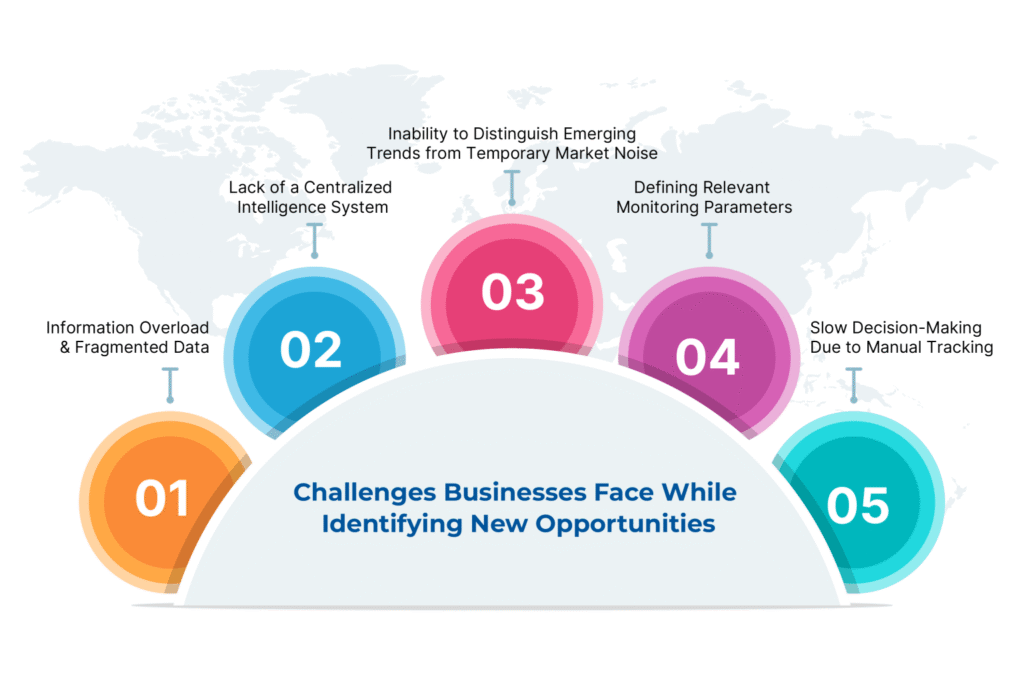
Here’s the uncomfortable truth. Real opportunity often feels heavy before it feels exciting.
It asks you to care deeply. To take responsibility for solving something properly. To stay when it’s easier to pivot. If an idea feels meaningful but intimidating, that’s not a red flag. That’s usually a sign you’re touching something real. The most impactful business opportunities don’t just promise growth. They demand commitment.
Conclusion
Identifying new business opportunities in a competitive market is less about brilliance and more about attention. Attention to frustration. Attention to behavior. Attention to what people quietly tolerate because no one has offered better. Crowded markets are not full. They’re layered. And most businesses operate on the surface.
Opportunity lives below that surface, where needs are unmet and stories are unfinished. If you’re willing to listen longer, look deeper, and stay curious where others rush past, opportunity doesn’t need to be invented. It reveals itself.
FAQs
1. Can business opportunities exist in oversaturated markets?
Yes. Saturation usually means demand exists, not that needs are fully met.
2. How do I know if an opportunity is real or just an idea?
Real opportunities are supported by repeated customer behavior, not just interest.
3. Should I focus on trends to find business opportunities?
Trends can signal change, but sustainable business opportunities usually come from unmet needs, not hype.
4. Is innovation always required to stand out?
No. Improvement, clarity, and better execution often create stronger differentiation than novelty.
5. What’s the biggest mistake when identifying opportunities?
Ignoring discomfort. Most opportunities hides where problems feel inconvenient or complex.