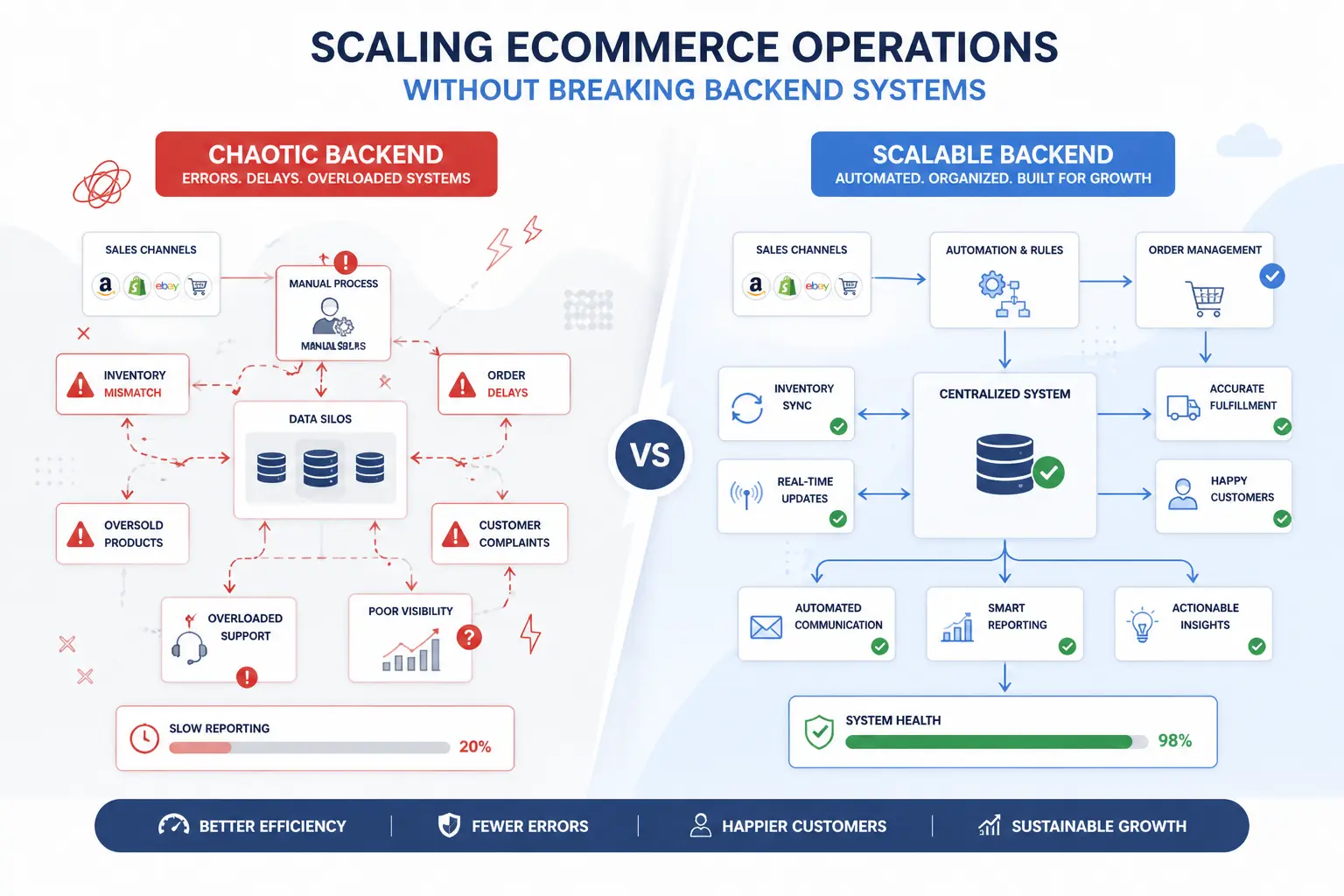
Scaling sounds simple in theory more orders, more revenue, more growth. But in reality, growth introduces complexity faster than most systems can handle. This is where automation in ecommerce backend operations becomes critical not as a luxury, but as a necessity for maintaining control while scaling.
The real role of automation in ecommerce backend operations is not just reducing workload. It is about creating consistency, eliminating manual errors, and allowing systems to handle volume without breaking.
But there’s a catch automation only works when the process behind it is already clear. If the process is broken, automation simply accelerates the breakdown. When used correctly, automation becomes a multiplier. When used blindly, it becomes chaotic.
What Automation Actually Means in Ecommerce Backend Operations
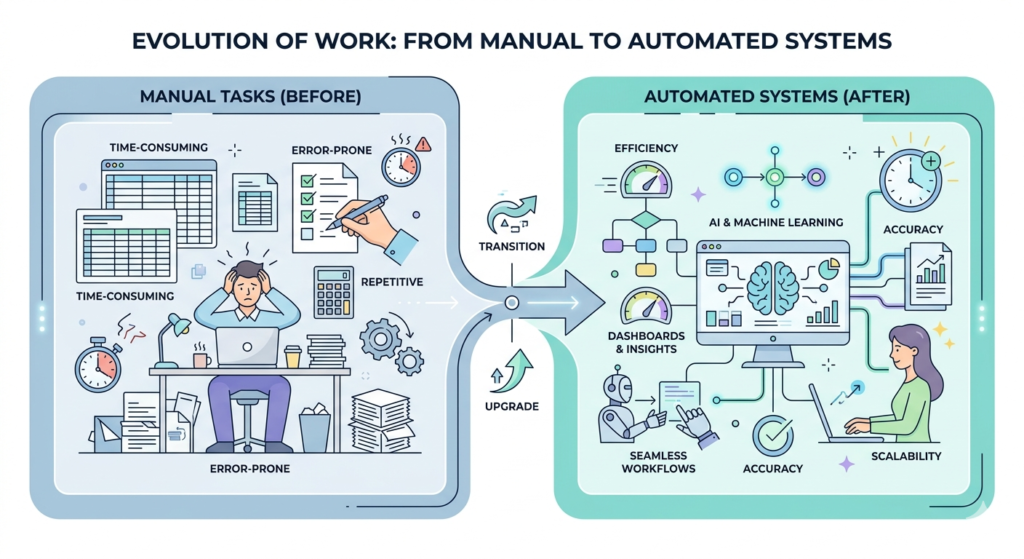
Automation is often misunderstood. It’s not just about “saving time.” In automation in ecommerce backend operations, it refers to removing human involvement from repeatable, rule-based processes.
It typically exists across multiple levels:
• Rule-based triggers
Automatically routing flagged orders for review without human intervention
• System-to-system sync
Inventory updates flowing across platforms, improving ecommerce backend workflow efficiency
• Workflow automation
Returns, refunds, and updates happening automatically within defined rules
• AI-assisted operations
Forecasting demand and improving ecommerce process optimization through predictive logic
The core idea is simple automation handles repetition, while humans handle decisions.
Where Automation Creates the Most Leverage
Not all operations need automation. The biggest impact comes from areas that are repetitive, high-volume, and error-prone.
Key high-impact areas include:
• Order routing
Automatically directing orders to the right warehouse based on location and stock improving order management system efficiency
• Inventory management
Auto-triggering restock alerts, enhancing warehouse management and reducing stockouts
• Returns processing
Automating labels, refunds, and tracking a major win for ecommerce process optimization
• Customer communication
Shipping updates, confirmations, and notifications improving overall ecommerce backend workflow
• Fraud detection
Flagging risky orders based on predefined rules
Automation in ecommerce backend operations here doesn’t just save time it removes operational friction.
Building the Automation Stack Without Creating Chaos

Automation can quickly become messy if not structured properly. Many brands end up with disconnected tools and overlapping automations, which harms ecommerce backend workflow instead of improving it.
To build clean automation:
• Define where data lives
• Map how systems connect
• Identify dependencies
• Assign ownership
• Set up monitoring alerts
Without these, automation failures go unnoticed and impact order management system reliability. The goal is not more automation. The goal is structured automation.
What Automation Cannot Replace
Automation handles logic not judgment.
There are critical areas where human input remains essential:
• Complex customer issues
• Supplier negotiations
• Strategic inventory decisions
• Vendor accountability
These areas require context, experience, and decision-making things automation cannot replicate. Strong automation in ecommerce backend operations reduces workload, but it increases the need for better operational leadership.
Practical Entry Points for Getting Started
Automation doesn’t need to start big.
The simplest way to begin:
• Identify repetitive emails
• Find manual spreadsheets
• Track daily repetitive tasks
These are often signs of weak ecommerce process optimization.
Start small:
• Automate notifications
• Automate low-stock alerts
• Automate reporting
This builds confidence and gradually improves ecommerce backend workflow without overwhelming systems.
Conclusion
Scaling ecommerce is not just about increasing demand it’s about handling that demand without breaking operations. That’s where automation in ecommerce backend operations becomes essential. It doesn’t replace people. It supports them.
When applied correctly, automation improves consistency, reduces errors, and strengthens systems like your order management system and warehouse management processes. But automation is not a shortcut. It is a multiplier.
The brands that succeed are the ones that first understand their processes and then automate them with clarity and control. Because in the end, automation doesn’t build strong operations. Well-designed systems do.
FAQs
1. What are the easiest automations to implement first?
Order confirmations, shipping updates, and low-stock alerts are simple wins in automation in ecommerce backend operations.
2. Do I need technical expertise to automate ecommerce operations?
Not initially. Many tools support ecommerce backend workflow automation without coding.
3. How do I prevent automation failures?
By setting alerts and monitoring systems that protect your order management system from silent failures.
4. Can automation improve forecasting?
Yes, especially through tools that enhance warehouse management and demand planning.
5. When should I invest in automation?
When manual processes start slowing down ecommerce process optimization and scaling becomes difficult.