Many ecommerce brands don’t realize they are running on a limited system until they try to grow and things start breaking. The real issue often lies in the difference between small and scalable ecommerce operations, a gap that only becomes visible under pressure.
At lower volumes, almost everything works. Orders flow, inventory is manageable, and the team handles tasks without friction. But as volume increases, the same processes begin to strain. This is where the scalable ecommerce systems becomes critical not in tools, but in how the entire system was designed to function under growth.
Scaling isn’t just about doing more. It’s about whether your backend can support doing more consistently, accurately, and without collapsing.
The Fundamental Design Philosophy Is Different
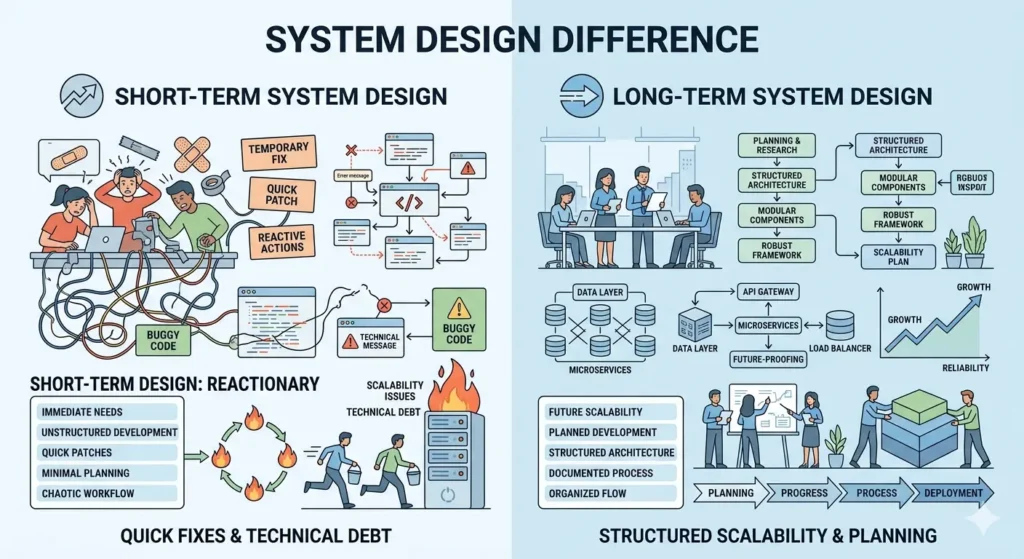
Small operations are built for immediate needs. Scalable operations are built for future capacity. That’s the core of the difference between small and scalable ecommerce operations.
• Small systems solve today’s problems
• Scalable systems anticipate tomorrow’s volume
• Small systems rely on individuals
• Scalable systems rely on documented ecommerce backend workflow
• Small systems react
• Scalable systems are structured with ecommerce process optimization in mind
The difference is not complexity it’s intent.
Where Small Operations Systems Start Breaking
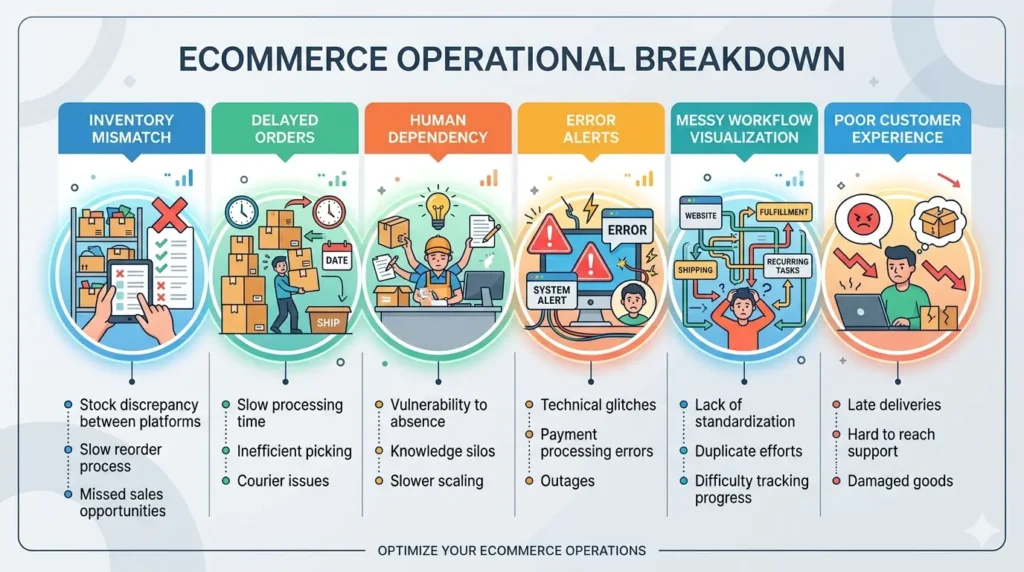
When growth begins, small systems don’t fail instantly they degrade gradually.
Common signs include:
• Inventory mismatches
A breakdown in fulfillment performance caused by manual tracking
• Increasing fulfillment errors
Processes built for low volume struggle at scale
• Knowledge dependency
Critical processes exist only in people’s heads instead of structured ecommerce backend workflow
• Delayed reporting
No proactive insights due to weak ecommerce process optimization
• Operational friction with new SKUs or channels
No scalable framework to absorb growth
These are early signals of the difference between small and scalable ecommerce operations becoming a bottleneck.
What Scalable Systems Look Like Internally

Scalable systems are not just bigger they are structured differently.
Key characteristics include:
• Documented processes
Ensuring consistency and repeatability in ecommerce backend workflow
• Clear data flow
Systems sync automatically, improving scalable ecommerce systems performance
• Defined ownership
Each process has accountability, improving execution
• Capacity buffer
Systems are not maxed out they are designed to absorb spikes
These elements directly improve fulfillment performance and reduce operational friction.
Technology: Tool vs Architecture
One of the biggest misconceptions is that scaling is about better tools. It’s not. The real difference between small and scalable ecommerce operations lies in how tools are used, not which tools are used.
Scalable operations:
• Integrate systems for seamless ecommerce backend workflow
• Automate repetitive tasks through ecommerce process optimization
• Maintain centralized visibility across operations
• Monitor systems to protect fulfillment performance
A strong system is not defined by software it’s defined by structure.
The People and Knowledge Structure
Small operations depend on people. Scalable operations depend on systems.
This is one of the most critical aspects of the difference between small and scalable ecommerce operations.
• Small teams rely on key individuals
• Scalable teams rely on documented processes
• Small systems break when people leave
• Scalable systems sustain through transferability
• Small teams operate from memory
• Scalable teams operate through structured ecommerce backend workflow
This shift is what enables consistent growth without operational collapse.
Conclusion
The difference between small and scalable ecommerce operations is not about size it’s about design. Small systems can perform exceptionally well at their intended level. The problem begins when growth pushes them beyond what they were built to handle.
Scalable systems, on the other hand, are designed with expansion in mind. They rely on structured processes, integrated systems, and strong ecommerce process optimization to maintain stability under pressure.
The transition doesn’t happen automatically. It requires deliberate effort identifying weak points, documenting processes, and building systems that can handle future demand. Because in ecommerce, growth doesn’t just test your product. It tests your operations.
FAQs
1. When should a brand move to scalable systems?
Before scaling pressure hits. Early adoption of scalable ecommerce systems prevents operational breakdown.
2. Is automation the main difference between small and scalable operations?
No. Automation supports ecommerce process optimization, but structure is the real difference.
3. How long does it take to scale operations?
Typically 6–12 months when improving ecommerce backend workflow step-by-step.
4. What breaks first when scaling?
Usually inventory and fulfillment performance, due to manual limitations.
5. Do small brands need advanced systems?
Not immediately but they must build toward scalable ecommerce systems early.